Move a Paddle With Your Mind
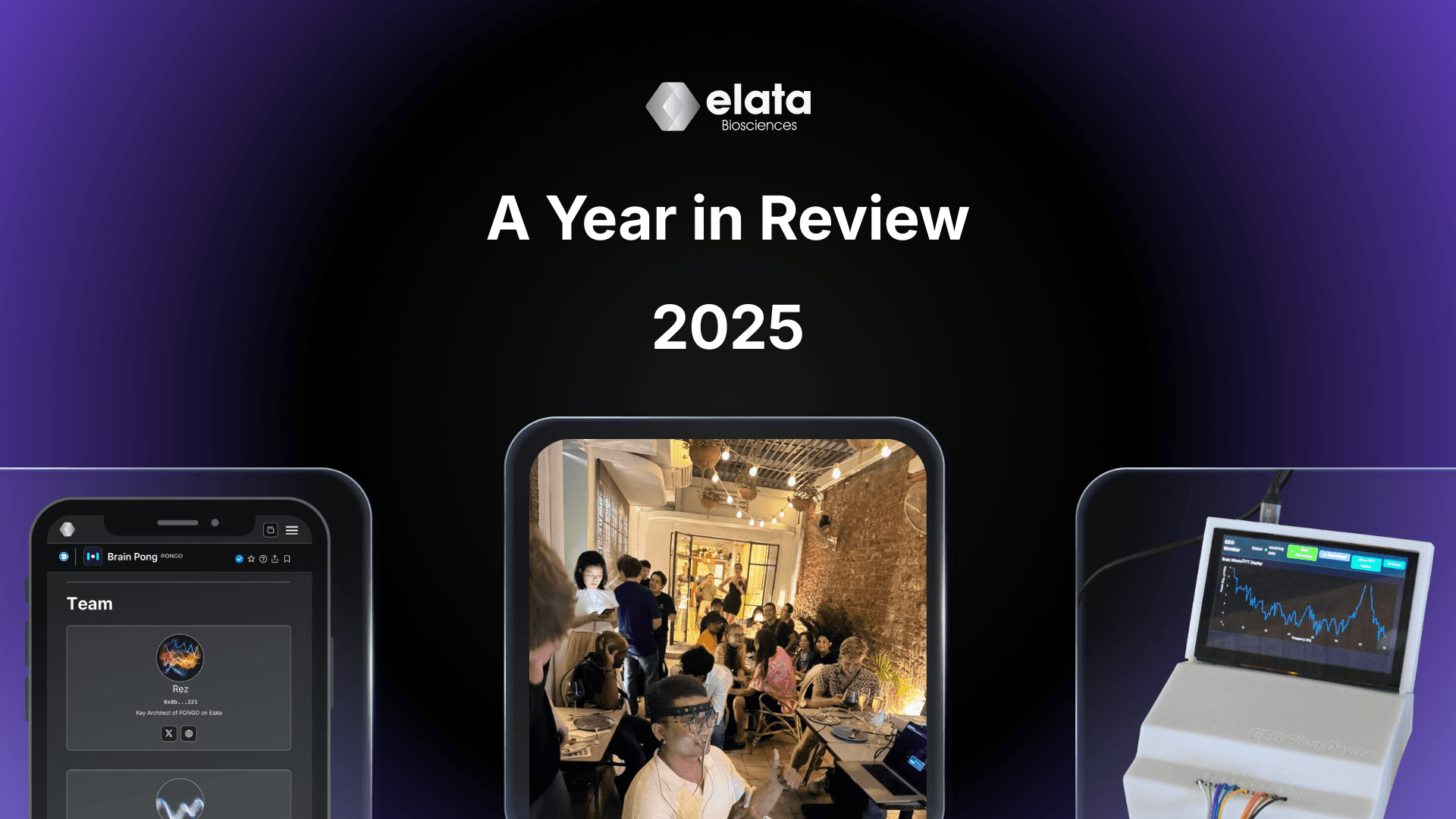
On October 1, 2025 at Token2049, Elata Biosciences invited people to sit down, put on a lightweight EEG headset, and play Pong without touching a keyboard, mouse, or controller. The paddle moved purely in response to changes in their brain activity. No hand gestures, no eye-tracking tricks—just neural signals streaming into an open-source stack and being decoded quickly enough to feel like a real-time game.
The demo ran entirely on Elata’s EEG platform and the Elata Protocol, which together form what we call an emerging “Internet of Brains”: a shared, decentralized layer for devices, apps, and research built around neural and physiological data.
Under the Hood: From Brainwaves to Game Loop
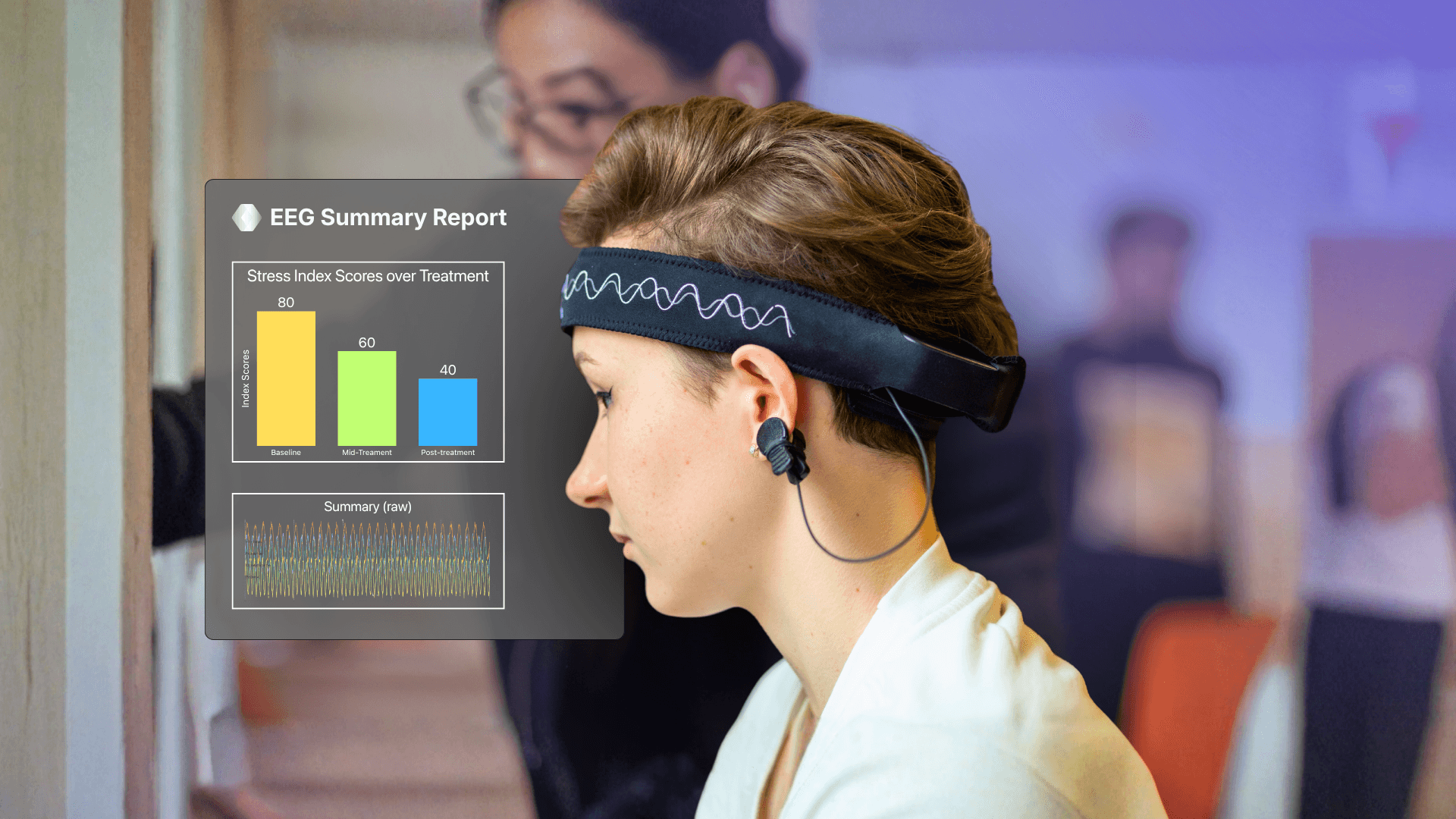
The experience starts with non-invasive EEG. The headset captures tiny voltage changes from the scalp, which are extremely noisy in a crowded conference setting. Those raw signals are streamed into Elata’s preprocessing pipeline, where artifacts from eye blinks, jaw tension, and environmental interference are filtered out. Channels are normalized so the downstream models see a consistent signal.
On top of this cleaned stream, decoding models estimate a constrained set of mental states: for Pongo, that means actions like moving left, moving right, or holding a neutral baseline. Keeping the action space small lets us calibrate quickly for first-time users and maintain robustness across very different brains. The game loop listens to these decoded states, converts them into paddle velocity, and renders the result immediately. The effect is a closed feedback loop in which intention feels like a control surface you can learn and refine.
The Internet of Brains: Protocol + Open Stack
What differentiates this from a one-off lab prototype is the infrastructure. The EEG platform behind Pongo is open and modular: standardized schemas for time-series data, reusable preprocessing graphs, and reference decoding models that can be forked, audited, and improved by anyone.
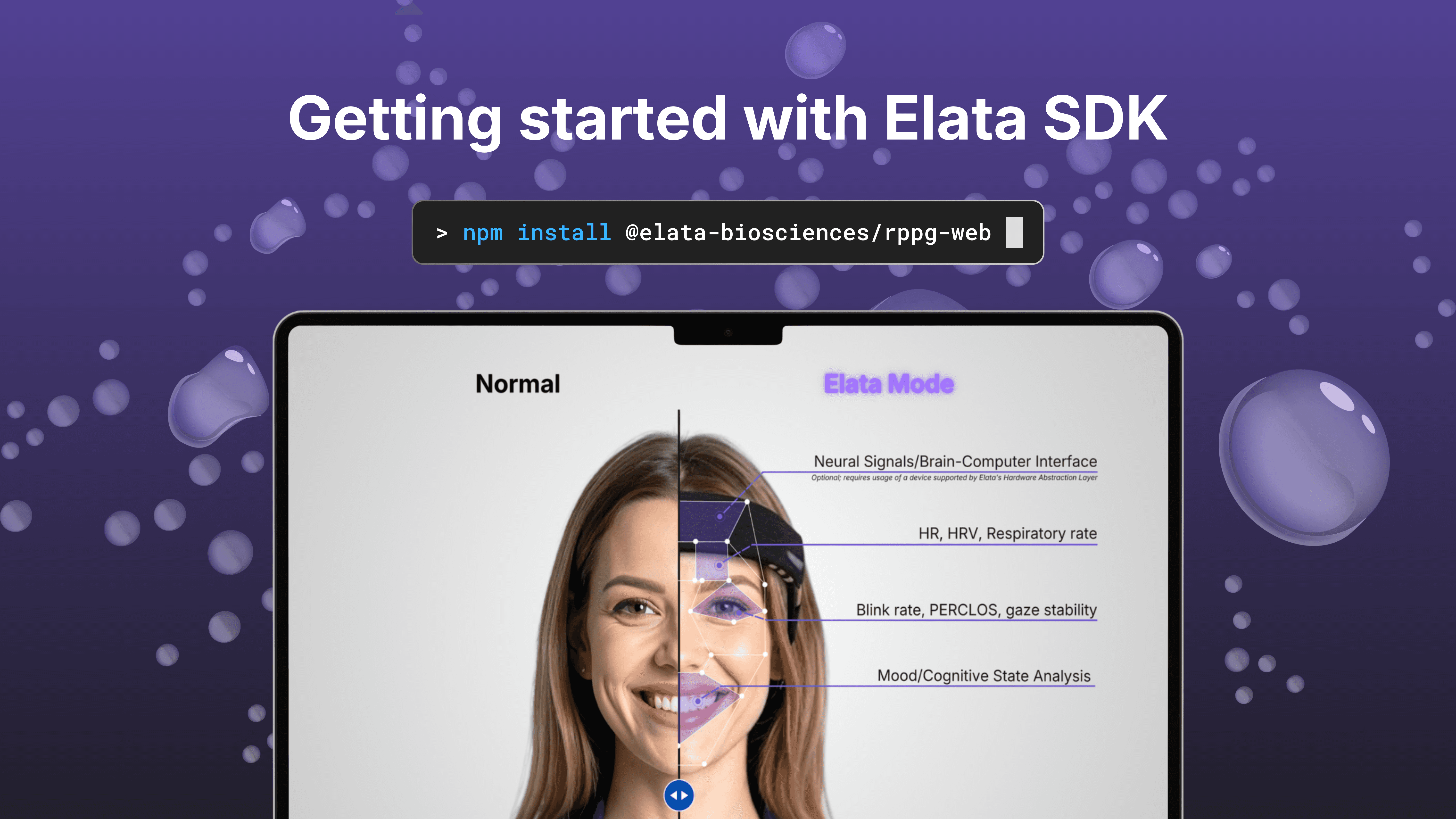
This stack is device-agnostic by design. Today it works with consumer EEG headsets; tomorrow it can integrate rigs that combine EEG with rPPG, eye tracking, or other biosignals. If a device can stream data into Elata’s schemas, it can participate in the same pipelines that powered the Token2049 demo. That is the core of the “Internet of Brains”: many devices, many apps, one shared language.
Above this sits the Elata Protocol, an app and research economy that coordinates how the network evolves. Developers ship neuro-enabled applications on top of the stack. Researchers contribute models, experiment templates, and analysis methods. Users bring their data and attention. The ELTA token is the mechanism that aligns these groups, directing resources and incentives toward the most valuable integrations, tooling, and use cases.
Pausing Hardware to Double Down on Device-Agnostic Infrastructure
In light of this direction, Elata will be pausing its in-house hardware development for the time being. We believe our greatest leverage is not in owning a proprietary headset, but in architecting the connective tissue that lets any capable device plug into a global brain-data network.
Focusing on a device-agnostic Internet of Brains and the Elata Protocol lets us move faster with partners who are already building world-class sensors, while we concentrate on standardization, tooling, and cryptoeconomic design. In practice, this means prioritizing adapters, open schemas, and protocol incentives over pushing a single, vertically integrated hardware product. When the ecosystem is healthy, many devices can thrive on equal footing.
Open, Inspectable, and Right-to-Repair by Design
Neurotechnology should not be a black box. The same data and models that power games like Pongo will eventually underpin mental-health tools, cognitive training, and clinical research. That is why Elata’s core infrastructure is open source and built around a right-to-repair mindset.
People and communities should be able to inspect and modify the code that interprets their brain signals, move their data between tools, and avoid lock-in to any single vendor’s roadmap. Open standards also make it easier for researchers to compare results, reuse pipelines, and collaborate across institutions without reinventing the stack for every study.
Why Pong Matters, and What’s Next
Pong is deliberately simple, but it makes something abstract feel real. Most people have no intuitive sense of what a brain-computer interface or a decentralized neuro-stack actually means. Sitting down, focusing, and watching a paddle move in response to internal state turns those ideas into a tangible experience, while simultaneously stress-testing latency, reliability, and user experience in a noisy, real-world environment.
From here, the work shifts from one-off spectacle to ecosystem building: richer neuro-enabled games, tools for focus and relaxation, standardized experiment frameworks for labs, and support for more devices and modalities. The Token2049 launch was our first large-scale proof that mind-controlled experiences can run on open, decentralized rails. The next phase is turning that proof into a durable, protocol-driven Internet of Brains.